Thursday, January 24, 2013

J. J. Abrams is directing Star Wars Episode VII

Eh? Eh??!!
So, after all the speculation, with names such as Matthew Vaughn (would've been awesome), Jon Favreau (might've been awesome), Brad Bird (also would've been awesome), Colin Trevorrow (have no damn idea, haven't seen Safety Not Guaranteed), as well as Zack Snyder's rumored Seven Samurai/Jedi spinoff (which could be awesome, or crash and burn like Sucker Punch), it appears now that J. J. Abrams has officially secured the directing gig of Star Wars Episode VII. And honestly? I feel that there's no better choice. Oh sure, Joss Whedon, Bird or Vaughn could have definitely made a killer Star Wars film, but Abrams is the obvious right man for the job, if a slightly safe pick. As evidence, I present Star Trek, by which I mean the 2009 franchise reboot/reset/prequel/sequel/whatever-this-damn-time-travel-fuckery-makes-it-in-terms-of-continuity which Abrams spearheaded. Within, he clearly retunes the idea of Trek by making it bigger, louder, more character-driven, less philosophically or technologically minded, and more commercially viable. And while you can argue that this devalued everything that Gene Roddenberry created the series to stand for, it also can't be argued that the film is a big load of good old-fashioned sci-fi blockbuster fun. As a matter of fact, I would argue, between its Han Solo-ization of Kirk, its Obi-Wan-ization of Old Spock, and its focus on character and pace, its not only a refreshing take on Star Trek, but it's also a better Star Wars film than the prequels. It has everything that those effects-driven emotionally-empty corporate monstrosities lacked. So, I think Abrams is a great choice, Fanboy worlds colliding notwithstanding. Seriously, how bizarre is it that the same guy may now be in charge of the two biggest sci-fi franchises of all time? Just wanted to say a little piece on why I love Abrams for this, so that's all. But if you're still not sure that he's worthy of the position, keep an eye on his upcoming sci-fi blockbuster, Star Trek Into Darkness. Maybe a little Benedict Cumberbatch will change your mind.

You think your world is safe... but you underestimate the power of the dark side. And deductive reasoning. By the way Kirk, your daddy issues are written all over your torn left sleeve.

Sunday, January 13, 2013

Inglourious Basterds vs. Django Unchained

Well, 2013 has arrived, and while a "Best of 2012" list is certainly forthcoming (in which I will touch upon all the films I did not review this year as well, such as Argo, Lincoln, The Hobbit, and Skyfall), I'm not quite ready to make it yet, as there are still many highly touted films from 2012 that I have yet to see, including The Master, Silver Linings Playbook, and Zero Dark Thirty. But what I can and do feel compelled to talk about is the newest Quentin Tarantino film, Django Unchained, his sendup to the touchy subjects of American slavery, spaghetti westerns, and the usual quixotic Tarantino brand of  hilarious, crowd-pleasing, bone-crunching violence. However, I have decided to eschew reviewing Django Unchained on its own merits and save that for the "best of" list. Instead, I'm specifically going to talk about it in terms of its relation to Tarantino's previous film, his 2009 faux-World War II war epic Inglourious Basterds. Tarantino himself has said that the two films form the first two parts of a thematically connected period revenge trilogy, that he will seemingly complete with his next planned movie, another WWII feature titled Killer Crow, that will tie together the movies by bringing in the African American themes, and throwing the Basterds into the mix in a post-Normandy environment. I'm going to discuss the connections between the films by their similarities, differences, and overall quality. I should note that I'm a big QT fan, and that some may think that I'm fawning over these movies, but I genuinely think that few films convey such a sense of raw cinematic enjoyment. So, without further ado, I shall begin.

PART I: SIMILARITIES
We're gonna be risin' up and doin' one thing only: killin' whites.
1. Both films operate on the same level of heightened reality.
It is clear within the context of both films that QT does not intend for these films to take place in "our world", so to speak. He has long said that his films operate in specific universes; There is the "Movie Universe", in which certain movies in his oeuvre (namely, Reservoir Dogs, True Romance, Pulp Fiction, Death Proof, Inglourious Basterds, and now Django Unchained) take place in a world with a very similar order to our own, and then there is the "Movie Movie Universe" in which the characters from the other movies view for entertainment (those being Natural Born Killers, From Dusk till Dawn, and the Kill Bill movies; Jackie Brown doesn't appear in either universe, due to being based on an Elmore Leonard novel). Most characters are confined to their own respective universes (As examples, the Vega Brothers, Mr. Blonde (Michael Madsen) and Vincent (John Travolta) from Reservoir Dogs and Pulp Fiction, as well as film producer Lee Donowitz (True Romance), as well as his father, Eli Roth's Donny "Bear Jew" from Inglourious Basterds. None of these characters could arrive in Kill Bill or From Dusk till Dawn, but could potentially show up in any of the more reality-based films), with a few exceptions (those being, according to QT, Harvey Keitel's "The Wolf" from Pulp Fiction, and Michael Parks' Sheriff Earl McGraw, who has shown up in From Dusk till Dawn and Kill Bill, but also in Death Proof, as well as Robert Rodriguez's Planet Terror). It's all a very confusing and under-explained modus operandi, but the general gist is that even though the two films in question take place in the more realistic universe, they still operate on a heightened sense of reality. Hence, in the version of history supplied by these movies, World War II ends with Hitler being shot by Sgt. Donowitz in a movie theater in Paris in 1944, while the theater in question turns into an exploding bloodbath. Also, the Ku Klux Klan is apparently fully organized two years before the Civil War even begins, AKA before it even had a reason to exist in the first place. Both of these examples, and the heightened reality itself, uncover the main theme of both of these movies, which is to rewrite history through a cinematic lens, dealing with important issues such as slavery and the Holocaust by satirizing them through the use of Sergio Leone-esque spaghetti western style of tension, as well as delivering QT's typical brand of pulpy entertainment thrills. People whine about the "stupid" anachronisms of these movies, such as Rick Ross rapping through Django's exploits, or David Bowie's "Cat People" playing over the premiere of Nation's Pride. But all of them feed into QT's aforementioned central theme. (I know this first one was so long, but it was generally my main point behind writing the article).

2. Both films share the same unique style and story.
Tarantino clearly, from the beginning, set out to make Django Unchained feel like the spiritual successor to Inglourious Basterds, from Robert Richardson's gorgeous cinematography to the stylized sets, as well as the usage of the aforementioned anachronistic soundtracks and blood-bursting violence. Both films also feature the same basic revenge tale, with the Basterds and Shosanna taking revenge on their Nazi nemeses, and Django and Schultz taking on Django's oppressors and Schultz's quarries, as well as the captors of Broomhilda and the traitors to Django's race (Namely, Stephen. More on him right now). My most important similarity remains.

3. Both films contain a complex antagonist whose motives are always uncertain.
This guy is neither one of them.
I put the picture of Calvin Candie above mainly because he is not one of the antagonists I am talking about. Leonardo DiCaprio wasn't bad in the role, and he certainly was a fun and colorful villain, but there wasn't much to him above his nasty slaveowner status. He had his nice "why don't they rise up and kill the hwites" moment, and he earned the eternal ire of Dr. King Schultz for his general disregard and unpleasant nature towards the issue of slavery, but he was NOT the main bad guy of the movie. No, much to my surprise, the main villain was, in fact, Stephen, Samuel L. Jackson's sycophantic head slave to Candie.
WHO DIS N**** ON THAT NAG??!!
I fully believe that Jackson will go down as the most overlooked actor in this movie. Stephen is the most "un-SLJ" role that the actor has played in quite some time, and once again proved that Jackson is always at his best when working with QT (Jules Winnfield from Pulp Fiction, of course, and the undervalued and totally batshit scary Ordell Robbie from Jackie Brown remain two of Jackson's finest performances to date). Jules was a soldier of fortune whose life was changed by what he perceived as a message by God to change his ways, while Ordell was a nasty and dangerous criminal who would off basically anyone that threatened his self-perceived idyllic lifestyle. Stephen, however is an entirely different beast. He is an old slave, having served the Candie family plantation, Candyland, for 76 years, and in this time, he has earned a modicum of confidence from the family. In sharp contrast to the other slaves, Stephen is given duties to manage and even punish the other slaves, has earned a modest level of respect from the otherwise slave-derisive Candie, and is even able to sass his master or persuade him to speak to him in private when need be. When you see Candie and Stephen both sitting in armchairs in the library, it's almost as if they are equals. Unfortunately, this has made Stephen sycophantic to Candie's needs, laughing faux-jovially at basically anything his master says, as well as making him an Tarantino-ized Uncle Tom figure, a submissive sellout to his own race, betraying Broomhilda and Django to Candie for his own personal gain. And once Candie (SUPER MEGA SPOILER) is gunned down, Stephen takes his rightful place as the central antagonist, being clearly in charge despite his submission to Candie's surviving sister Lara. In the depths of his mangled soul, Stephen even considers himself white, not realizing the complete betrayal of his race and their current political situation will eventually lead to his downfall. He is a symbol of what an oppressive culture can do to a people, given enough time, and Jackson pulls off Stephen's delusions with aplomb. However, he still is not quite as complex as the labyrinthine mind that inhabits the central villain of Inglourious Basterds:
I will make you cry, given enough time for polite conversation.
With an Academy Award under his belt, and another possibly forthcoming, no actor has benefited more from these films than the German thespian Christoph Waltz. Dr. King Schultz is without a doubt the most enjoyable character in Django Unchained (you basically are grinning any time he opens his mouth), being a clear anchor for Django to latch onto, as well as a central figure to root for until Django has matured enough as a character to take over the lead role. He is also a wonderfully complex character, being strongly opinionated about slavery and having a very unique code of honor. However, in the annals of film history, most will probably remember Waltz more for his Oscar-winning villain from Inglourious Basterds, SS Colonel Hans Landa. Landa is easily the most complex character QT has ever created. At first glance, he simply appears to be an extremely clever, high-minded manipulator who uses his skills of persuasion and persistence to bend others to his will; seemingly, his will is to hunt out the remaining French Jewish population for his Führer. There is an unusual air of menace about him; every single character he has an extended conversation with eventually has a nervous breakdown simply from being in his presence (that is, until he meets his match in Lt. Aldo Raine). However, he is later revealed to mostly be acting out of an extreme sense of self-preservation; he will join whatever side suits him the best. As soon as cutting a deal with the Americans becomes his best option, he abandons the Nazi ideology and jumps ship for better waters (namely, the shores of Nantucket Island). Luckily, Raine and Utivich make sure he doesn't get away so cleanly. So, as you can see, there are many similarities that help connect the films, making their unified thematic message more clear. However, there are some differences that separate them as well.

PART II: DIFFERENCES

1. Django Unchained features a far more straightforward narrative.
The title says it all. Though there is a jump in time around the first hour, Django Unchained abandons the almost vignette-esque structure from Tarantino's previous works in favor of a simpler, more pointed story. Schultz finds Django, Django and Schultz find the Brittle brothers, Schultz trains Django, Django and Schultz operate as partners for the winter, they go after Calvin Candie, Stephen captures Django, Django escapes slave traders, Django destroys Candyland and saves Broomhilda. The End. Inglourious Basterds, on the other hand, has a story that jumps all over the place (not so much as in Pulp Fiction or Kill Bill, but still less than a straight arrow). Chapter 1 takes place in 1941, Chapter 2 in a similar timeframe before suddenly and abrupting jumping ahead, while the remaining three chapters take place in 1944. However, part of Chapter 4, where Lt. Hicox meets with Gen. Mike Myers and Winston Churchill, almost certainly takes place before the remainder of it, while Chapter 5 all takes place in one night. The story twists and turns and becomes continually labyrinthine, with the Basterds' plans and Shosanna's plans tangentially forming as the story develops, before Hans Landa returns late in the story and ties it all together in Chapter 5. All story developments are closed in the climax where the cinema burns down, and that leaves the coda with Raine, Landa, and Utivich to provide a satisfying resolution, in which we finally see Landa lose in cool in the face of the Basterds' uncompromising devotion to their punishment of Nazis. It's all a little muddled, but in general, it comes together quite nicely, somewhat cartoonish ending notwithstanding.

2. The protagonists in Inglourious Basterds really aren't that important to the main plot.
Really, in the grand scheme of the story, how important was Raine? They scalped some Nazis in Chapter 2, were involved in a Mexican standoff in a basement bar in Chapter 4, and helped Landa contact General "Voiced by Harvey Keitel" in Chapter 5. Donny and Omar are the only Basterds who accomplish anything in terms of Operation Kino, succeeding in taking out Hitler and blowing up the cinema. Also, wouldn't the theater still have exploded if Shosanna hadn't plotted to burn down the cinema? The only thing accomplished by her side of the story is that none of the high-ranking Nazi officials can escape due to Marcel's sealing of the exits. Also, the fact that Hitler is gunned down in a burning cinema further emphasizes Tarantino's desire to re-conceive history on a heightened cinematic basis. No, in this movie, the plot is its own main character, with the machinations of Landa, Raine, and Shosanna all colliding in the cinema in "Revenge of the Giant Face". Meanwhile, in Django Unchained, Django, Schultz, and Broomhilda are clearly and specifically the focal points of the story, with the Brittle brothers and Candie merely serving as obstacles for them to overcome.

3. The two films feature vastly different styles of resolution.
Once the endgame of Inglourious Basterds was in place, in takes about ten minutes in grand total for everything to wrap up, and it doesn't completely stick the landing. QT clearly wrestled with this ending, with everything so brilliantly plotted up to this point, and it's clear that he eventually went "F*** it, let's blow reality to smithereens". Thus, all the major Nazi players die in a cinema in 1944, ending WWII with Hans Landa, freshly swastika'd, being handed over to American forces in order to finish his arrangements for personal security. Meanwhile, Django Unchained features a 30-minute coda that, instead of simply resolving the plot in a stylish manner, fully showcases how much Django has truly grown as a character. He is able to successfully escape from his captors, in a very similar manner as to how Schultz freed him at the beginning, then infiltrates Candie's plantation one last time, avenging himself on Broomhilda's oppressors, before (seemingly in a nod to the previous film's ending) blowing up Candyland. Stephen also notes that Django will now become the one hunted by bounty hunters, or rather he would, if there had been any evidence that he'd ever been there post-explosion. Django then rides off into the sunset (or in this case, moonset) with his beloved, much like the hero in the westerns that clearly give Tarantino inspiration in all of his films.

PART III: OVERALL QUALITY
So, how good are the films compared to each other, and to Tarantino's entire canon? Well, for starters, I think they're both masterpieces in their own unique ways. Inglourious Basterds is Tarantino-War, while Django Unchained is Tarantino-Western. Neither probably matches up to his most seminal work, Pulp Fiction, which is basically Tarantino-Universe, but I'd probably rank them second and third in his canon. But which is over the other? In conclusion, probably Inglourious Basterds, but by just a hair. There wasn't quite as much going on in Django Unchained, and Hans Landa is the best character in the two by a long shot, but Django has the better ending, and features the more likable and identifiable protagonists. I didn't even mention how quietly great Jamie Foxx is in showing the hard-edged evolution of Django. By contrast, Aldo Raine is just kind of a caricature, while Shosanna is a revenge fantasy. Django Unchained was slightly more bombastic, with the quieter moments in Inglourious Basterds coming from the intense undercurrent beneath scenes like the opener on Perrier LaPadite's milk farm, or the entire bar sequence. Django Unchained has only one scene with this ferocity, when Candie talks to Stephen and brings out the skull of Old Ben. There's also slightly more excess in the latter film. Longtime QT editor Sally Menke appears to be sorely missed, as Fred Raskin (Fast Five) appears to have more difficulty in reigning in Tarantino's craziness.

Nevertheless, I enjoy the hell out of both movies. QT is truly a unique filmmaker, and these films represent him at his best, and sometimes his worst. But I'll take all of him as he is, as without his flaws, he wouldn't be the creative voice he is today.

Both Inglourious Basterds and Django Unchained get a perfect 10.


Saturday, November 3, 2012

5 Filmmakers Who Could Direct the HELL out of Star Wars Episode VII

So, will there be a Mickey Mouse-Star Wars-Avengers crossover or what?
So, as many of you must have heard by now, Disney has purchased Lucasfilm, George Lucas' longstanding production company, and in a shocking but wholly welcome move, have announced a new Star Wars trilogy, beginning with Episode VII in 2015, and two or more movies following after that. Mere months after Lucas announced that he would never return to the space opera franchise that made him famous, it became clear that that did not mean we would never see new Star Wars movies. Rather, we'll just be seeing them from someone else, with Lucas merely taking the position of original storywriter and creative consultant. As a man who considers The Empire Strikes Back to be his all-time favorite film, this is indeed some good news. After the (mostly) disappointment of the prequel trilogy, attributed by most to Lucas' dictatorial style of creative control over the franchise, someone new will get to step up to the plate, and will have a chance to give to one of cinema's greatest franchises the resurrection it deserves. My only caveat with this announcement is the reveal that it will indeed be Star Wars Episode VII. I probably would have preferred a complete cutting of ties to the previous films; not a reboot, but maybe a revamping in the spirit of J. J. Abrams' Star Trek, where they do fashion a new mythology, while still acknowledging the past and bridging the two timelines. Nevertheless, the idea of a new director overseeing Star Wars certainly excites me, and I've decided to compile a list of the top 5 directors in showbiz who could successfully bring back Jedis on the big screen. However, it will ignore directors who I don't think would do it, such as Abrams (he doesn't want to start a fanboy war) or Joss Whedon (too busy with Avengers 2). #5 will follow, after this unrelated gif that explains everything wrong with the prequels:

Meesa not aware of such electric bombad shocks, okey day?

5. Andrew Stanton
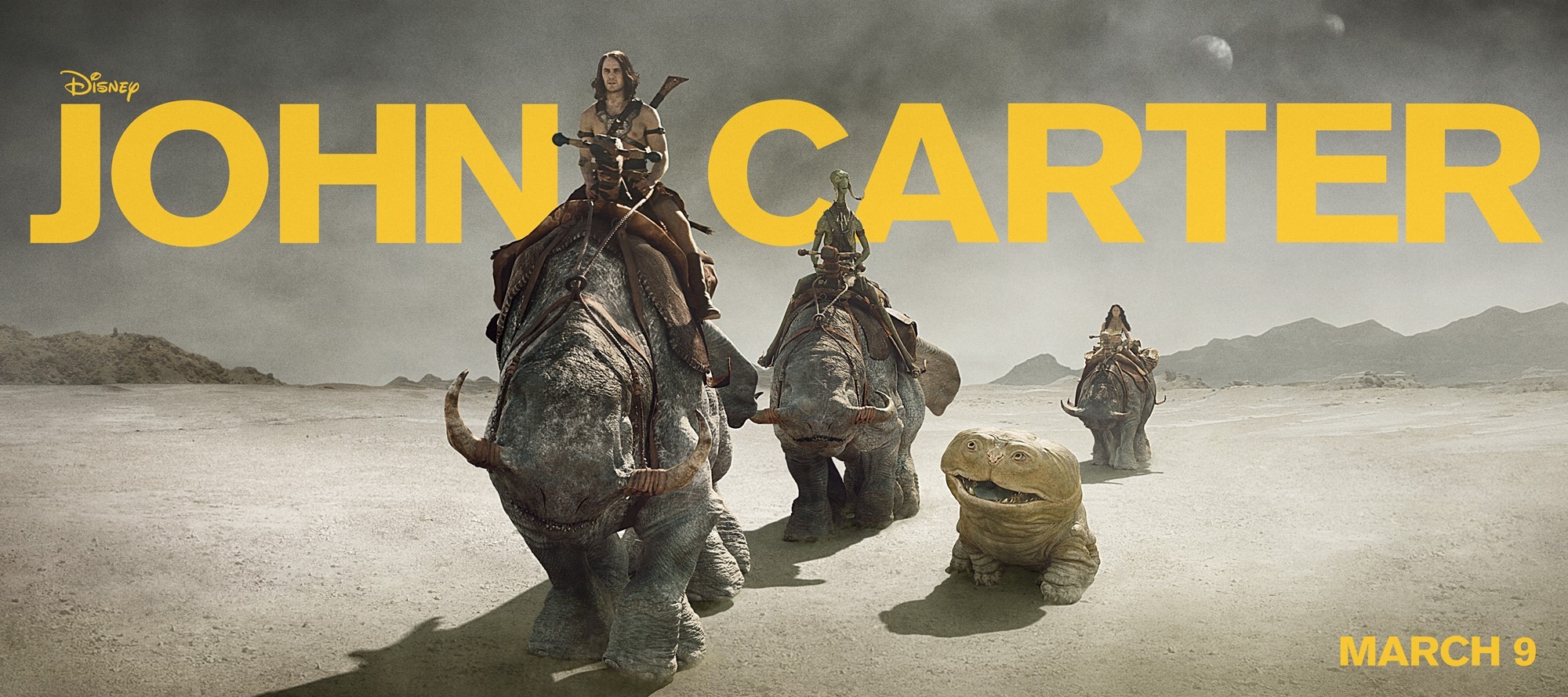
This looks familiar... reeks and acklays??
I'm gonna say it up front here: I was not the biggest fan of John Carter. I thought the mythology was too dense and overly complex to sustain interest, and that the overly expository nature of the tale killed its pacing and made the movie lose me. However, that was mostly from a screenwriting perspective (and boy, was this film put through the wringer there), and doesn't really have anything to do with director Andrew Stanton. From a directorial and visual standpoint, the Pixar regular fashioned a fairly impressive film, replete with memorable imagery and neat setpieces, that also clearly showcase how the Edgar Rice Burroughs novels influenced Lucas (arena scene, anyone?). Also, Stanton has shown that he can craft interesting stories and characters through his Pixar work, with Finding Nemo and WALL-E representing some of the finest work the acclaimed animation studio has ever put out. If Stanton could reign in the glossy CGI that Lucas lost himself in in the prequels, and focus on bringing out the strengths of the characters in the script, combined with having to deal with an already-established and widely beloved backstory (as opposed to the mere cult audience of John Carter, which led to it bombing), and Stanton could craft a Star Wars film that is both a box office hit and a fanboy feast. And Disney, having him right in their wheelhouse, doesn't have to look far to get him. I think he can be reserved as the fallback choice. 


4. Gore Verbinski
From pirates to cowboys to Jedis = Natural Progression
Now some will ding me for this choice, because they didn't like the Pirates of the Caribbean sequels, but hear me out: Gore Verbinski has a top-notch sense of visual style, he's crafting some of the finest special effects extravaganzas in the business, his body of work is diverse, he knows his way around a blockbuster, and most importantly, he's crafted a film very tonally similar to the original Star Wars trilogy: Pirates of the Caribbean: The Curse of the Black Pearl. Orlando Bloom's Will Turner plays the classic Errol Flynn-esque hero role, AKA the Luke Skywalker, while Jack Sparrow is the maverick, the mischievous and adventerous rogue, the ship captain, the Han Solo of the piece. Elizabeth Swann is the damsel in distress, very much like Princess Leia, and Barbossa is the classic villain, the simple foe to pit good against evil, the Darth Vader. Not to mention the funny, action-packed, visually sumptuous, and swashbuckling tone that is exactly what a proper Star Wars film needs. The jury might need to be out until the release of The Lone Ranger, but for now, Verbinski is also a solid choice, who also might have a better word in with Disney at making box office gold. 

3. Brad Bird
But if they cast Tom Cruise as Han Solo... NOOOOOO!!!
It may be remembered by some that I enjoyed Mission: Impossible - Ghost Protocol quite a bit earlier this year, and much of that can be attributed to the splendid work of director Brad Bird. Unlike the previous bloated and often empty M:I films, Bird crafted a tight, smart, focused, and team-oriented thriller that differentiated the Tom Cruise action franchise from other similar spy fare for the very first time. Also, he's yet another director in Disney's Pixar family, having been the helmer of both The Incredibles and Ratatouille. The real reason I list Bird at #3, though, is his handling of effects in Ghost Protocol. Despite having a background in animation, Bird directed a film in this digital age that utilized CGI effects as little as possible, preferring to have Tom Cruise actually jump around on the Burj Khalifa as opposed to CGI'ing him there from a green screen. I think that Bird, by taking the same naturalistic approach that he brought to Ethan Hunt, and putting it in Star Wars, could recapture some of the gritty griminess that hallmarked the Star Wars of old, away from the overly shiny and fakey sheen of the green screen fueled prequels. If Bird could get a proper team of writers, and come up with a unified vision, it could be a real winner.

2. Matthew Vaughn
I would gladly trade Days of Future Past for Star Wars
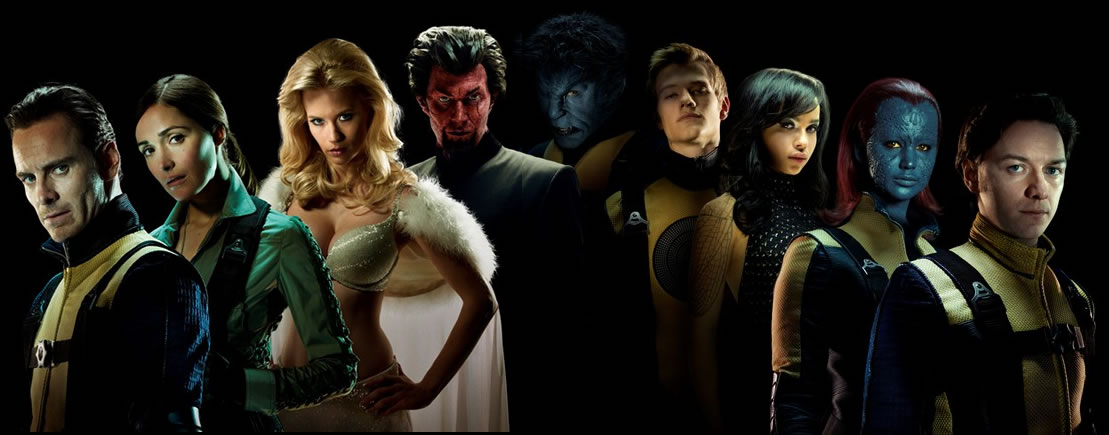
One film I liked quite a bit last year was Matthew Vaughn's X-Men: First Class. It's a movie that got me interested in the franchise for the first time, having never been a particular fan of Bryan Singer's dreary and somewhat anticlimactic installments, nor Brett Ratner or Gavin Hood's trainwrecks. Vaughn dropped out of the sequel, X-Men: Days of Future Past, just last week (now to be directed by Singer), leaving him very much open to direct whatever he wants, including a certain space opera. I like Vaughn for the job less because he's tonally perfect for it than because he's an exciting up-and-comer, and I enjoy his body of work as a whole more than those of Bird, Verbinski, or Stanton. I feel like Vaughn has a genuine vision when he sets out to direct a film, even turning a potentially huge loser of a proposition like Kick-Ass into an enjoyable experience. Overall, I just like the guy's movies, and I think that him directing a Star Wars flick is a winning idea.

1. Alfonso Cuarón
From ultra-dark sci-fi to lighthearted fun. Why not?
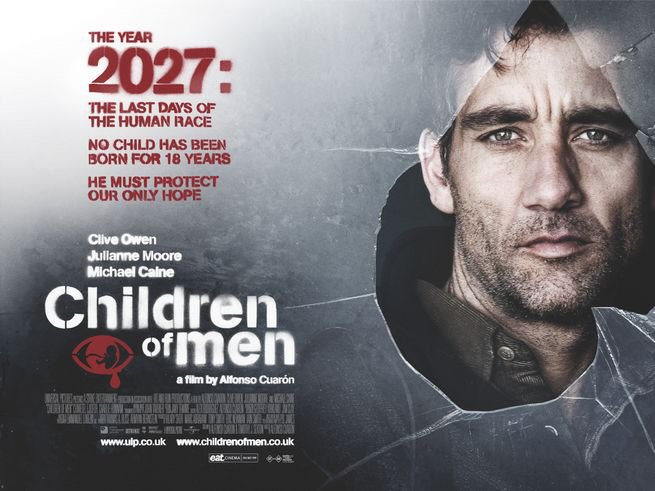
I know this guy's been suggested by virtually everyone (along with Bird and Vaughn), but dammit this guy is so versatile. He goes from directing dramatic fare like Y Tu Mamá También, to doing the best Harry Potter film, to making a dark apocalyptic tale in Children of Men, and then goes on to direct a super-ambitious sci-fi drama in the upcoming Gravity. A better question is, why SHOULDN'T this guy direct a Star Wars movie?

Really though, there are a massive cadre of filmmakers who would consider it a dream job to take a shot at Episode VII, and with two more to follow (and maybe more beyond that), we might actually see a good Star Wars movie again in our current lifetimes. And a week ago, we may never have thought that was possible.

Also, I think they should stick with John Williams for the score. 

Saturday, October 6, 2012

Marvel Cinematic Universe - Phase One Review & Phase Two Preview

The Avengers. A "World's Mightiest Heroes" type deal.
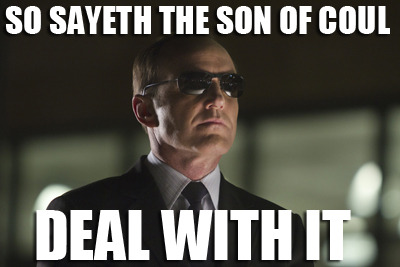
After rewatching The Avengers on Blu-ray, and reaffirming my affection for it, I considered doing a proper Avengers review after missing out on the chance to do so after seeing it in May, but I decided the review would be outdated and pointless, so rather, I decided to go over all six Marvel Cinematic Universe - Phase One films, before we begin Phase Two with Iron Man 3 and Thor: The Dark World next year. I will begin with an overview of all six, then delve into individual mini-reviews for each of them, right after this photo of the Son of Coul...

Son of Coul sayeth... "So that's what it does".
In general, I feel that the idea for a continuous movie universe starring Marvel characters, on paper, sounds completely insane. It's crazy ambitious, difficult to capture tonally, and potentially disastrous from a financial standpoint if executed poorly. Yet, once Marvel Studios grabbed on to the rights to some of their best characters, they didn't let them go, and managed to craft one tonally consistent universe across six films that, while occasionally hiccuping from an individual movie standpoint, comes together quite nicely in the grand scheme of things. I really believe that Kenneth Branagh's high-flying fantasy epic Thor occurs in the same universe as Joe Johnston's almost grounded and gritty The First Avenger. So, without further ado, onto the individual films.

JON FAVREAU WAS ABLE TO BUILD THIS IN A CAVE!!
WITH A BOX OF SCRAPS!!!!
It would have been extremely hard to make this universe work without a strong, convincing, and most importantly, fun standalone start, and director Jon Favreau's 2008 film Iron Man delivered that in spades. I'd argue that, after Batman Begins, it's one of the first truly well-executed examples of a modern superhero origin story on film. It gives us a rich, narcissistic, and war profiteering, yet somehow still lovable, protagonist in Tony Stark, and it sets him on the path of becoming a guy who tries to help change the world. Favreau's direction is surprisingly strong, despite this being his first film on such a high scale, with excellent execution of the comedy, drama, action, and especially the special effects, with the Iron Man suit shining in a way the Transformers of Michael Bay's films never could. The script he's given (written by the scribes behind Children of Men and Punisher: War Zone) is also shockingly complete, despite being a cherry-picked hybrid of two different writing teams. In particular, the first act is outstanding. Stark's capture, team-up with scientist Yinsen, and subsequent escape in his first prototypical suit feels grim and real, despite all the goofy arc-reactor robot suit comic-booky technology surrounding it. Considering that it is the very first thing we see of this universe, it's almost off-putting how much darker it seems by contrast from the rest of the films, or even the second and third acts. Luckily, they manage to keep a feel of continuity by bringing back the terrorist organization, the Ten Rings (hints for Iron Man 3, methinks?), later on as Iron Man's first opponents, and then tie them in to his first real nemesis, Stark's business partner Obadiah Stane, AKA the Iron Monger. Of course, this film would have been far lesser without the magnetic appeal of Robert Downey Jr. His casting is one of the best examples of superhero casting ever, right up there with Chris Reeve (and Chris Hemsworth, but we'll get to him later), and his lovable scamp is arguably, nay definitely, the main reason why it works. Jeff Bridges makes for a strong and imposing antagonist, and Gwyneth Paltrow nails Pepper Potts. Sam Jackson's first brief appearance as Nick Fury was also good for a fist pump, as well as Clark Gregg's scene-stealing first turn as the aformentioned S. H. I. E. L. D. agent Phil Coulson.  I was less than impressed with Terrence Howard, though (probably why he was recast), and Ramin Djawadi's score is generic at best (they should just have used a hard rock soundtrack instead). It also has a somewhat shaky and slightly anticlimactic third act. But yeah, very strong and enjoyable film. Until a few months ago, the best in the MCU.

Iron Man gets an 8.5 out of 10.

Can you say "least important film in the series"?
Our second experience in Marvel's greater movie universe, a month after the release of Iron Man, was, rather than another origin story, a reboot, bringing the big green guy, the Hulk, into the Avengers fold, with director Louis Leterrier's 2008 film The Incredible Hulk. Now I'm going to say this up front: I think that Ang Lee's 2003 Hulk is a remarkably underrated film. It was slow, yes, and it did fail to cater to audience expectations for a Hulk movie, but still, it managed to take a goofy comic book story about a big green angry guy and give it a magnanimousness of almost Shakespearean proportions. It had a really solid cast (Eric Bana was a very interesting choice for Bruce Banner), and some interesting directorial choices from Lee, but in terms of Marvel's greater plans for the future, it wouldn't amount to much. So, Leterrier and Edward Norton were brought in to deliver a picture that would give audiences what they expect, and for the most part, they succeeded. The Incredible Hulk is a well-made, flashy, action-packed, and generally well-acted movie, that sidesteps the origin story of the Hulk in favor of simply cutting to the aftermath with him on the run. Banner as a fugitive immediately distances it from Iron Man, and Norton does an adequate (if blunt) job of getting across the character's plight and inner anger. Leterrier's direction is competent, with some good set pieces, including an excellent climactic battle between the Hulk and Tim Roth's Abomination in Harlem. However, Zak Penn's script (uncredited rewrite by Norton) and Leterrier's previous directorial experience also holds them back. The main problem with The Incredible Hulk is how rote and mindless it is. It's solid entertainment, yes, but nothing else. In this regard, it's stylistically reminiscent of a straightforward Jason Statham action flick (like Leterrier's two Transporter movies), just with big CGI monsters in the climax and some decent actors (Norton and Roth are good, William Hurt is probably the standout as General Ross, Liv Tyler is OK not great as the love interest, etc.). Also, in the grand scheme of the Marvel Cinematic Universe, it's pretty inconsequential. All of the other heroes that come into play in The Avengers had at least one film within two years of the release. The Hulk had a four-year gap, and the fact that the role was recast didn't help either. The Incredible Hulk is an OK movie, but if you have to skip one MCU film, make it this one.

The Incredible Hulk gets a 6.25 out of 10.

Why does Rhodey look so different....?
Iron Man 2, despite Jackson and Downey showing up in the last 2 films as connective tissue, is where the Marvel Cinematic Universe really started to get off the ground. Released in 2010, two years after the other films, it reunited original Iron Man director Favreau with Downey, while replacing Howard with Don Cheadle as Rhodey, who becomes War Machine this time around. It also introduces Scarlett Johansson as Black Widow (a big player in The Avengers), and fills the role of the villain with Mickey Rourke as Ivan Vanko, a version of the comic book character Whiplash, as well as Sam Rockwell as a secondary antagonist as Stark's business rival Justin Hammer. As I said above, Iron Man 2 feels more like a concrete step toward The Avengers than its predecessors, and while that works in the grand scheme of things, I think it also hurts the movie individually. While the movie starts off well enough, feeling like a clear continuation of its predecessor visually and plot-wise, its need to tie in with the greater universe leads to a LONG second act, where not much of consequence happens other than Stark having a drunken Iron Man fistfight with Rhodey in his first outing as War Machine, who conveniently is an expert with it, despite us never seeing him use it before. Then, it wastes its time puttering around with Nick Fury and Black Widow in a donut shop. Then, it wastes its time with a scene involving Tony and Pepper arguing over his stupid antics. Then, it FINALLY gets back to the plot just in time for the third act, which is mostly satisfying until Vanko shows up and is dispatched far too quickly, before ending with a cliffhanger for Thor. Oh, and did I mention that Tony was dying for most of the film? No? Well, that's because other than being a MacGuffin, it doesn't really matter all that much. Justin Theroux's script had a few too many holes for my taste, which may or may not be because of studio interference (Rumor has it that's why Favreau withdrew from Iron Man 3). Luckily, Downey, Cheadle, Rourke, Jackson, Rockwell, Paltrow, and Johansson (despite her character being woefully underused and underdeveloped) bail the film out in its weakest moments with strong acting, along with some good comedic moments from Favreau as Happy Hogan. John Debney's score is an improvement as well, and I hope they keep him around for the next one. Iron Man 2 works better if you think of it as a piece of a larger puzzle, but as a standalone movie and sequel, it falters.

Iron Man 2 gets a 6.5 out of 10.

My worries were so petty... and tiny.
If there was ever a point in the Marvel Cinematic Universe where it would be most liable to screw up, it would have been Thor. Kenneth Branagh's gravitas-loaded fantasy was the point where Marvel Studios stopped attempting to strictly adhere to comic-book realism, to take things outside the realm of science and into the realm (ahem) of the alien and supernatural. In the hands of a unaware filmmaker, the film could have crashed and burned, and due to its very close plot proximity to The Avengers, it could have sunk the universe along with it. Luckily, Branagh knows how to blend comedy, action, and otherworldly epicness, and thus, Thor was my biggest surprise of 2011, a movie that I went into with low expectations but ended up enjoying quite a bit. It effortlessly ties into the greater universe in a way that Iron Man 2 tripped and stumbled to do by comparison, while establishing a fascinating universe all its own, that of the Nine Realms. We only see the Norse-heaven Asgard and the icy Jotunheim here, but in the sequels, we're promised to see more (and judging from the title Thor: The Dark World, we're going to see some pretty nasty ones next year). It's a compelling addition to the Marvel Cinematic Universe that greatly expands it, taking it beyond the technological warfare and gamma radiation squabbles of the first three films, and bringing it up to a purely cosmic level. And somehow, it gets more introspective and intimate at the same time, through Thor's personal journey to humility on Earth. As I said above, Hemsworth is purely perfect casting for Thor, capturing the hero's charisma, swagger, arrogance, and ultimate inherent goodness. And his casting as the hero is only matched by Tom Hiddleston as the jealous adopted brother, Loki. Loki is arguably one of the best-working characters in the whole MCU (right up there with Iron Man; there's a reason why their one shared one-on-one scene in The Avengers works so spectacularly), and Hiddleston brilliantly conveys the character's trickery, treachery, and hunger for power. Anthony Hopkins is also well-cast as Odin, Thor's father, as is Stellan Skarsgard as Dr. Selvig (another Avengers tissue character). Coulson also returns in a significant supporting role, and Clark Gregg is just as much of a pleasure this time around, as is Jackson's return as Fury in the post-credits scene, and a surprise cameo by Jeremy Renner as Hawkeye. Natalie Portman is... superfluous at best, just miscast as an astrophysicist and unnecessary. Jaimie Alexander could have been Thor's love interest (did I mention that Ray Stevenson is delightful as Volstagg?). Thor serves as the direct lead-in to The Avengers, and succeeds as that and as a standalone, thanks mainly to Branagh and Hemsworth, even if the second act on Earth drops the cosmic meter a bit.

Thor gets an 7.75 out of 10.

I didn't know the Human Torch used a shield.
The last film in the MCU released before The Avengers, Captain America: The First Avenger, directed by Jurassic Park III and The Rocketeer helmer Joe Johnston, from a script from Narnia writers Christopher Markus and Stephen McFeely, starring former Fantastic Four actor Chris Evans as the Cap. In general, The First Avenger, out of all the films in the MCU, is the one I'm the most conflicted about. Unlike Thor, where my expectations were fairly tempered, the trailers and marketing for this one had given me rather high expectations. I went into this expecting a superhero origin on par with Iron Man, and instead, I got a pitch-perfect first act, and two good but flawed latter acts, with a climax and a villain that were rather disappointing. I also thought that we really didn't get to see enough of Captain America in costume, strutting his stuff and using his shield. We got two action sequences in costume total, along with one montage of him taking down Nazis. The rest of the film focused around skinny, sickly Steve Rogers being transformed into a powered up supersoldier, followed by said supersoldier transitioning into the iconic superhero, peppered with a love story and a plot bringing the main MacGuffin of the entire Phase One, the Tesseract (Cosmic Cube), center stage, along with Cap's archnemesis, Johann Schimdt, the Red Skull, head of HYDRA, a renegade subdivision within Nazi Germany now striving for a higher purpose. The main problem is that after little Rogers powers up, the movie has nowhere to go, forcing Johnston to focus on the time period and war effort, getting off the main focus of the movie. I also didn't think Evans was exactly perfect casting; don't get me wrong, he's good, but he's definitely the least suitable of his co-stars in The Avengers. I was also left slightly wanting with Hugo Weaving, as I felt he was perfect for the Red Skull, only to spend the whole film obsessing over his broken German accent. Hayley Atwell and Tommy Lee Jones were very good, though, as was Dominic Cooper as a young Howard Stark, setting up the Cap/Iron Man dynamic a generation early. Sebastian Stan was barely in the movie as Bucky Barnes, but something tells me (probably the title of the sequel, The Winter Soldier) that he'll be back. Alan Silvestri delivers a suitable, if unmemorable theme, and Shelly Johnson's shadowy cinematography suits the period nature. The First Avenger is a good movie, probably the middle movie among the first five setup flicks, but I left the theater feeling like it could have been so much more.

Captain America: The First Avenger gets a 7 out of 10.

They're dangerous. And the whole world knows it. EVERY world knows it.
And finally, after four years of prep, five films, and the hiring of cult legend Joss Whedon, The Avengers arrived. And despite every possibility for it to suck, for every chance that it would buckle under the weight of having to balance multiple superheroes at the same time, it totally and nearly completely pulled it off. Don't get me wrong, The Avengers ain't perfect; its second act and 140-minute runtime can be a little long in the tooth, and it doesn't really seem to be sure which of its characters is the strongest (Iron Man is a little too much of a match for Thor and Loki). But still, it's quite possibly the best movie of its kind, a big-budget effects-heavy blockbuster that stays focused firmly rooted on its characters, while keeping a lighthearted, funny, and optimistic tone. In this regard, it reminds me very much of Star Wars. And much like the space opera, it dominated the box office, becoming the highest grosser of the year and the highest grossing movie ever made not directed by James Cameron. And I can safely give most of the credit to Whedon. As writer and director, Whedon delivers his breakout movie here, the one that will definitely bring his popularity to the mainstream. He clearly loves and understands the characters, and gives them each their due, even Hawkeye (despite being brainwashed half the movie). Downey, Evans, Hemsworth, Johansson, Jackson, Gregg, and Renner all bring their A-game here, and none of them can steal scenes because they all collectively own them. Hiddleston becomes a far greater antagonist here, and he makes the most of it, taking Loki's megalomania to new heights, and becoming the threat, mixed with the coming Chitauri invasion for the Tesseract, that requires the Avengers to assemble. However, the big winner here, and the performance that will most be remembered (in spite of getting arguably the least screen time) is Mark Ruffalo, taking over as Bruce Banner. The character is used to far greater effectiveness here than he ever was alone, painting Banner as a man constantly on edge, and if his guard is brought down, he falls into the green-filled rage. So much is conveyed just by how much Banner refers to the Hulk always as merely "the Other Guy". And the Hulk himself is a brilliant mixture of feral power, great mocap action, and quite a few laughs. All of these characters shouldn't be in the same state, let alone the same team, between Iron Man's narcissism, Cap's no-nonsense leadership, Thor's godly arrogance, and the Hulk's potent rage, and that's exactly what makes them such a powerful force when brought together. And the 45-minute third act battle for New York, where they all come together against the virtually insurmountable threat, is truly a wondrous sight, where Fury's plan for the Avengers finally comes to fruition. The underlying theme of the film is the return of heroism into a world that believes heroes are dead. As the late, great Phil Coulson says "we could use a little old-fashioned". It's not the best film of the year, but it may very well be the most entertaining on a purely fun level.

The Avengers gets a 9.25 out of 10. It's by far the best film in Phase One.

My guess is we will see what it means to court death itself.
So now, the question becomes, where do we go from here? And the mid-credits scene of The Avengers does hold some hints, as the mysterious Chitauri referred to only as "The Other" (played by Whedon regular Alexis Denisof), the one who dealt with Loki, discusses the Avengers' threat with the Special Guest Villain surprise, Thanos, wielder of the Infinity Gauntlet and one of Marvel's deadliest villains. Considering that Whedon is indeed returning to write and direct The Avengers 2 (coming in May 2015), it's almost definite that we'll be seeing him at some point. Phase Two begins with Iron Man 3 next year, directed by Kiss Kiss Bang Bang director Shane Black, with Downey returning (for possibly the last time??) as Tony Stark, with Ben Kingsley as the villain, Iron Man's archenemy the Mandarin. The word is good so far from here, so we'll see in May. Then there is The Dark World, which is currently being directed by Game of Thrones helmer Alan Taylor, reuniting most of the cast of Thor, along with Christopher Eccleston as the new villain, Dark Elves leader Malekith the Accursed. Asgard sounds like it'll be grittier and less shiny this time, so color me interested. The Winter Soldier is still in pre-production, but will be directed by former Community executive producers and brother Joe and Anthony Russo. I love that show, so I'm also interested to see what they'll do transitioning from a sitcom environment to an action movie. Evans will be back as Cap, and apparently Johansson will return there as well, but not much on this one yet, other than that it's coming out in spring 2014. Then there's the wild card, the one that could basically turn out amazing or awful, and that's Guardians of the Galaxy, which will be written and directed by James Gunn of Slither and Super fame. Gunn is a good fit for the material, and the idea makes Thor look tame (there's a goddamn ANTHROPOMORPHIC ALIEN RACCOON), but if pulled off, the MCU will get even more cosmic than it already is. I'm really interested for this one, but it's still almost two years away. As for Ant-Man, to be directed by Shaun of the Dead's Edgar Wright, that may or may not happen in Phase Two. Another Hulk movie may or may not happen in Phase Two as well. And then there's this mysterious S. H. I. E. L. D. TV series, which will be put into development by Whedon, to watch out for in the next couple of years. And finally, Phase Two will presumably come to a close with Avengers 2, which will probably set the stage for Phase Three as well. This universe could go on for years and years, and if it continues to put out movies at this high a level, we may have a reliable source for good summer blockbusters for years to come.

Release dates for Phase Two:
Iron Man 3 opens May 3.
Thor: The Dark World opens November 8, 2013.
Captain America: The Winter Soldier opens April 4, 2014.
Guardians of the Galaxy opens August 1, 2014.
Ant-Man may or may not open in 2014 or 2015.
The Avengers 2 opens May 1, 2015.

"THAT MAN IS PLAYING GALAGA! He thought we wouldn't notice, but we did."

Monday, October 1, 2012

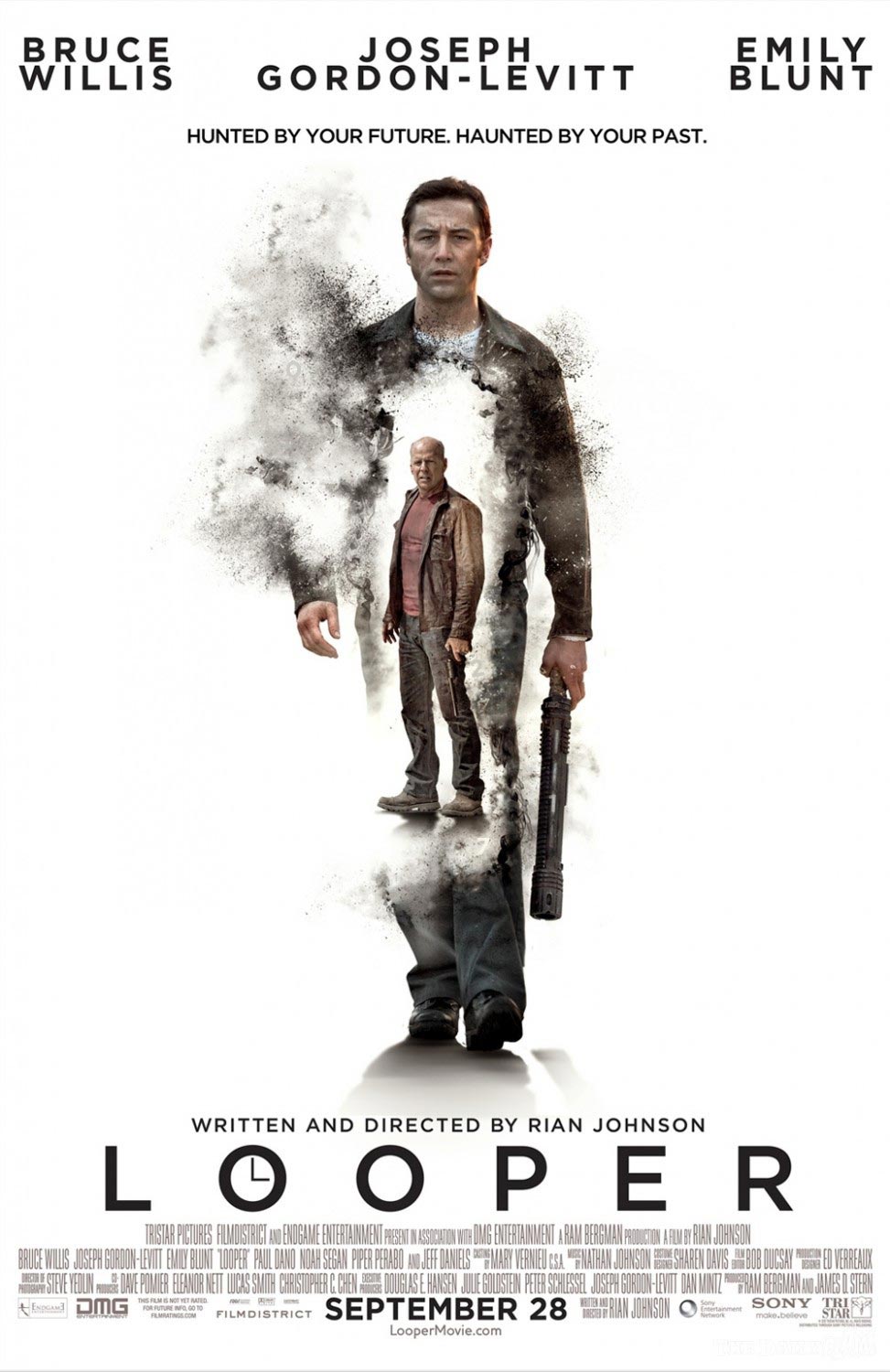
Looper Review

Joseph Gordon-Levitt is Bruce Willis. Does this mean that the kid from Brick eventually becomes Butch Coolidge?
Rian Johnson is one of the more intriguing under-the-rader filmmakers working today. Not only did he direct a smart and Hammett-esque mystery masquerading as a high school movie in Brick, but he also directed two of the best-crafted Breaking Bad episodes in "Fly" and "Fifty-One". After years of working with lesser known actors and being relegated to low budgets (though I haven't seen The Brothers Bloom, which had Rachel Weisz, Adrien Brody and Mark Ruffalo and was made for $20 million), he gets a shot at the big time with the new time travel flick Looper, starring his Brick star Joseph Gordon-Levitt (coming off his awesome supporting turn in The Dark Knight Rises), Bruce Willis (surprised to see him here, after years of C-grade actioners and self-parody), and Emily Blunt (fresh off a comedic turn in The Five-Year Engagement), along with There Will Be Blood's Paul Dano, The Last House on the Left's Garret Dillahunt, and The Newsroom's Jeff Daniels. All of these actors had nothing but praises for Johnson's work here, with Blunt going as far as calling it the best movie she's ever done, and that trailer really did a good job of sucking me in. Then again, there are plenty of ways to screw up time travel in screenwriting, and the idea of Gordon-Levitt playing a young version of Willis sounded strange at best on paper. So, my verdict on Looper comes after this image of Gordon-Levitt striking a Walt Kowalski pose:
Bang. Bang. 2044 Eye drop drugs. Sex with 2044 hookers. Repeat.
In general, I thought Looper was superb. By the time I was sitting in the theater, my anticipation for the movie had risen to quite high expectations, and I watched, almost shocked, as Looper met virtually every one of them. The movie works on multiple levels; as a dystopian sci-fi story, as a time travel movie, as a small-town drama about a former criminal protecting a mother and her child from threatening forces, as a violent crime flick, as an examination of oneself, and as a rollicking good time of an action movie. Looper represent Johnson's unshackled vision, freed from budget constraints and other technical issues, and it delivers quite well indeed. Time travel movies often suffer from very conventional logic problems, such as "what happens if you meet your future/past self?" or "what happens if someone from another time period is allowed to run amok? How will this effect the course of events as we know them?" or "Are there adverse side effects to time travel?" What I love about Looper in particular is how it prefers to simply acknowledge these conventions and simply sidestep them through character conversation. That's probably why the scene between the two Joes in the middle of the film in the diner works so well, as it basically tells the audience "there will always be logic problems in time travel stories, no matter what we do, so just get past them and enjoy the damn movie!" In fact, that's basically how Looper as a whole works. Despite being set 30 years in the future in an unspecified crime-ridden city in Kansas, there isn't a whole lot of world-building here. Young Joe gives us a narration explaining how the time travel and looper system works for the crime syndicate, and then we're basically thrust into the world. It introduces you to its universe in the manner of Blade Runner or Inception, where it simply presents how its world works to you in midstream, and never looks back. We're meant to infer many smaller details of the film, such as the eye drop drugs that Young Joe is addicted to that are barely referenced other than visually until midway through the movie. Johnson doesn't waste time explaining every damn thing in the movie, instead introducing us to much of the world through the visuals, and it works. For this reason, one of the most fascinating sequences of the film is (at least for me) when Old Seth gets robbed of his fingers and limbs while attempting to escape through them getting cut off of Young Seth's body. It's chilling, darkly funny, and ably showcases the movie's time travel mechanics, without having to speak a damn word about them. But yeah, from a scriptwriting and technical standpoint, Looper is damn near perfect. Its gripping narrative loses a bit of steam in its last act, where it trades in its time travel story for creepy Damien Omen kid telekinetic hijinks, but even those sequences are effective, just less thematically relevant to the movie. And even in those areas, Old Joe's presence keeps the themes firmly anchored. It doesn't hurt that these well-drawn characters are brought to life so well by their actors. Joseph Gordon-Levitt is having a banner year here. After big steps toward breaking out into the mainstream in Johnson's Brick, (500) Days of Summer, Inception, and 50/50, his presence in The Dark Knight Rises, Premium Rush, and Looper this year basically solidifies him as a leading man. And Looper may be his most impressive performance yet, as it pulls him so far away from his other roles (where he usually played an earnest good guy type as seen in Rises and Summer or a slick sharp type as seen in Inception or Brick), and puts him in the shoes of a highly unsympathetic hitman drug addict who unwaveringly kills his targets for money and drugs. Young Joe is a seriously fucked up individual, and the film (and Old Joe) make no attempts to hide this. Much has been discussed about Gordon-Levitt's makeup job as well, to pull him closer to the appearance of Willis. In the hands of a lesser actor, it would have come across as a cheap, poorly executed gimmick, but Gordon-Levitt, with his growling Willis voice and his made-up dimpled face, somehow pulls it off. I actually buy him as a young Bruce Willis, and it's only helped by the montage where we are shown Young Joe's aging into Old Joe, which is so good that the transition from a haired Gordon-Levitt to a slightly balding to fully bald Willis actually feels organic. Willis also does great work here, awakening from his long sleep in self-parody (And yes, Live Free or Die Hard and RED count as self-parody. The last Willis role I can get behind as original or compelling would be his part in Robert Rodriguez's Sin City seven years ago) with his two roles this year, one here and the other in Wes Anderson's Moonrise Kingdom, and he believably resurrects his action persona in Old Joe while also crafting a compelling, morally conflicted character. He wants to save his future wife from her murder at the hands of the goons of the mysterious Rainmaker, but knows that in order to do so, he'll possibly have to kill innocent people and even children, and the moral hell he goes through here is conveyed quite well. He also serves as a good example of a cleaned up version of Joe, freed from drug abuse and the reprehensible looper job through the love of his wife. But see, Young Joe goes through this much earlier, through his protection of Sara and her young son Cid, who may or may not be the Rainmaker that Old Joe is searching for. Emily Blunt is also great too, coming off as believably tough and hardened while clearly deeply loving and wanting to protect her son, in spite of his mistrust for her. Cid is also portrayed as oddly insightful and believably creepy, too, with some scenes directed by Johnson portraying him (as I stated above) almost like he's a demonic Damien-type kid, only saved by the love of his mother. The supporting cast is also outstanding, with Paul Dano portraying Seth's desperation over closing his loop well, and Garret Dillahunt coming off as cool and dangerous as Gat Man Jesse. Among the supporting cast, though, my favorite performance by far comes from Jeff Daniels as crime boss Abe, who comes off as cynical about the incoming future and acts almost resigned about his responsibility of managing the loopers. His sardonic sense of humor serves as ideal comic relief, and his mentor relationship with Young Joe shines through in the scene they share together. Nathan Johnson's score is serviceable but not invasive so as to not overtake the story, Steve Yedlin's cinematography is sharp but simultaneously dirty and grimy to portray the rather dilapidated nature of this future, and Bob Ducsay's editing beautifully puts together Johnson's story. Five months ago, I never would have predicted that I would pick Looper as the best science fiction film of the year (my pick then would have been Prometheus), and even the second-best film of the year I've seen up to this point (I can't put it above Rises). Yet, in early October, here I am. Looper comes very highly recommended for fans of Johnson, time travel, Gordon-Levitt, Willis, or basically anybody who likes to have a good time at the movies.

Looper gets a 9.5 out of 10.

The Blunderbuss may be my favorite movie gun ever.

Friday, September 21, 2012

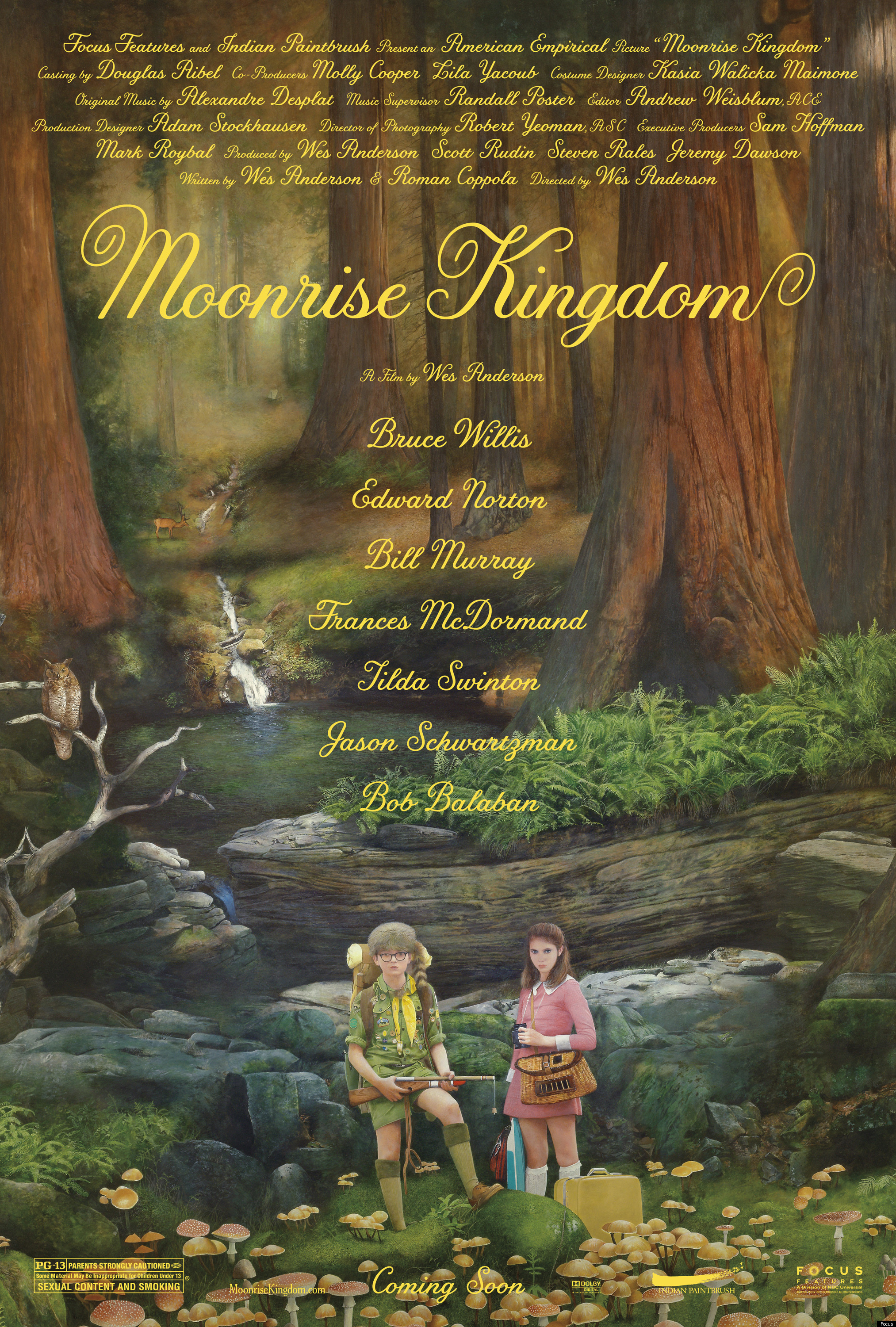
Moonrise Kingdom Review

Virtually every shot of Cousin Ben made me LOL
So, it's been a while since I did a movie review, not since The Dark Knight Rises, which I will maintain is the best film I've seen this year. Then again, I have yet to see The Master, Looper, Lincoln, Argo, The Hobbit, Zero Dark Thirty, Killing Them SoftlyDjango Unchained, or many others, so I should probably reserve judgment for another few months.

Seriously, HOW IS YOUR EYE NOT DRAWN TO COUSIN BEN?
Anyway, the most recent film I've seen is one that's been out for a while, indie auteur Wes Anderson's latest, Moonrise Kingdom. I am not overly familiar with Wes Anderson's previous oeuvre, having only seen his high school dramedy, Rushmore, a film I liked and enjoyed, but did not consider to be as great as some hold it in esteem. I've read many opinions, though, expressing negative doubt toward Anderson, calling him an overrated hack who makes quirky movies for the sake of being quirky. All that taken in, I felt Moonrise Kingdom was a better movie than Rushmore, but again, got the deep feeling that I would not end up loving it as much as some have. I think it's a good, warm, heartfelt, and spectacularly directed feature, that ably tackles such themes as first love, community, and family (touching, I noticed, on many similar notes with the aforementioned Rushmore), but also does something more ambitious. Even though Moonrise Kingdom takes place in a New England island community in 1965, it is a film rooted in some fantastical elements. A kid gets struck by lightning, two kids manage to run away together and flabbergast an entire town for an extended period of time, and Bob Balaban walks around as the narrator in different frames telling the audience of the town, the time period, and other things, while also popping up as a character in the movie. In a mere 93 minutes, Anderson and co-writer Roman Coppola succeed in building a miniature world for these surprisingly realistic characters to inhabit (the two kids feel real, but the adults, maybe not), so when the craziness is cranked up, it still feels grounded. Anderson's direction is, as previously stated, first-rate, taking advantage of multiple technical tricks in order to create a seamless experience that also feels artistically satisfying. The ensemble cast is also excellent. Bruce Willis, Bill Murray, and Edward Norton give understated performances that draw out the complexities of their characters. Bruce Willis' Captain Sharp is a scruffy lawman revealed to be a surprisingly warmhearted man, Edward Norton's scout master genuinely cares about his leadership role in the young scouts' lives, and Bill Murray's Walt Bishop (Is that a Fringe reference? Because God, I hope it is) is a regretful old soul living in a failed marriage. Most of this is understated and merely revealed in service of the plot, but it works towards a more seamless experience. The rest of the cast is also awesome, with expectedly good turns from Frances McDormand, Tilda Swinton, briefly Harvey Keitel, the aforementioned Balaban, and once again, my favorite character in the movie, Jason Schwartzman as Cousin Ben. None of these characters really "popped" for me, especially in contrast to Rushmore's Max Fischer, but that's because Fischer and Bill Murray's Herman Blume were at the heart there, while the heart of this one is also split in two, between the adult ensemble, and the young lovers. The romance at the heart of the film especially works, as not only does it make the two kids seem more mature than the adults in many respects (helped by the very real performances of newcomers Jared Gilman and Kara Hayward), but it feels real, because Sam is an orphan, and Suzy is an unstable girl who feels trapped in her life with her parents in a loveless marriage. They are two eccentrics stuck on the outside of the worlds they live in, and are understandably drawn to each other. The adults simply think they are acting out and mentally ill, and miss the point of their escapades entirely. It's a realistic first love story dropped smack-dab in the middle of all the surrounding insanity, and it grounds the film, keeping one foot in reality while letting the other fly into fantasy.

COUSIN BEN IS KEEPING THE NICKELS
So, yeah, in general, Moonrise Kingdom is one of the best films I've seen so far this year. It packs more in 93 minutes than a summer blockbuster like Battleship did with 40 more, and New Penzance feels a hell of a lot more like a built world than say, Pandora in Avatar. The built world is even microcosm'd in the film itself. The title is Sam and Suzy's world together, their only personal "moonrise kingdom". I don't think it's quite the masterpiece that some say it is, but it is quite a good movie, and worth 90 minutes of virtually anyone's time.

Moonrise Kingdom gets an 8.5 out of 10.

What kind of bird are YOU?

Sunday, September 2, 2012

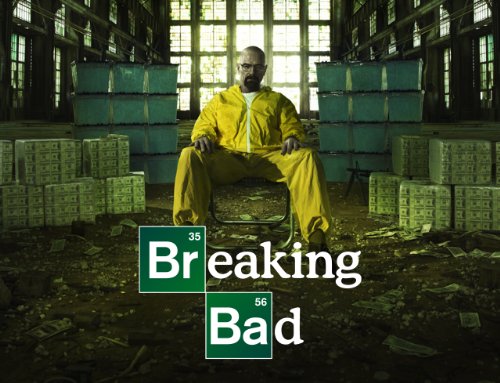
Breaking Bad - "Gliding Over All" Review + Season 5 Part 1 Recap

ALL HAIL THE KING. You're goddamn right.
It's probably a surprise to no one I know that I'm a massive, massive fan of Breaking Bad, the cornerstone of AMC's original programming lineup, and quite simply, one of the finest television shows of all time. The rise (and most likely fall) of Walter White/Heisenberg, struggling and unsatisfied high school chemistry teacher turned cancer afflicted meth cooker turned sloppy, grandstanding, egotistical meth cooker turned perceived kingpin badass evil meth cooker/distributor/murderer/millionaire, is the finest documentation of the belated flowering of a man's darker desires and ambitions this side of Michael Corleone. On top of that, it's a crackerjack crime drama/black comedy, filled with breathtaking suspense, clever and often hilarious dark humor, heavy and intricate story, and well-drawn characters played by outstanding actors, led above all by the former Dr. Tim Whatley, Bryan Cranston. Throughout its 5 seasons on the air, it has consistently stayed a superior product (much like Walt's signature blue crystal) of television, and looks to continue all the way through the final ending coming next summer. But enough of my almost gushing here. On to my series analysis.


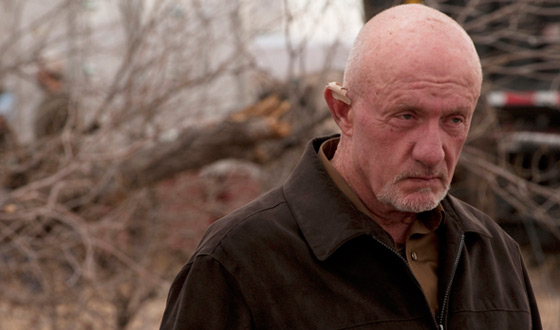
Breaking Bad started out strong, and hit the ground running. The first four seasons (along with the first four episodes of season 5) documented a year in the life of Walter White, starting at his fiftieth birthday, and ending shortly after reaching the age marker of fifty-one. In that one single year, Walter White transformed into a completely different and almost unrecognizable person. Spurred on initially by the cancer eating away at his lungs and putting a potential short fuse on his life, he seeks out the lowlife Jesse Pinkman, a former student of his, in order to learn the ways of the New Mexican meth trade, in which he intends to use all of his considerable skills in the field of chemistry, honed through a former life that he left behind to great regret, in order to financially secure the future of his wife, Skyler, his cerebral palsy-afflicted son, Walter Jr. (or Flynn), and later his baby daughter, while evading and contending with the ever-present threat of rivals (such as Crazy-8), psychotic drug lords (as was Tuco Salamanca and his crippled Tio), and of course his DEA brother-in-law, Hank Schrader, whose threat may be a tad too close for comfort. That was the general framework in which the first two seasons of Breaking Bad operated. It culminated in Jesse's brief rebuilding of his life (and his addiction to heroin) before he relapsed into squalor upon the death of his love interest Jane (which Walt was directly responsible for), and Skyler discovering (after great suspicion) Walt's true nature, and subsequently leaving him. Also, Walt and Jesse began to work (with the help of crooked lawyer Saul Goodman) under New Mexican drug kingpin Gus Fring. This put the series into phase two, which lasted seasons three and four. At the end is season two, Walt is undeniably already a rather vile human being, from his allowing of Jane's death, to his rather casual indifference for Jesse's problems that directly resulted from his machinations, as well as his criminal activity and clear deception of his family. Yet, you could still root for him here. Seasons three and four turned Walt clear-on into the darkness, as he completely eschewed his original motives for his drug operations in favor of a simple, primal desire, long hidden within by his deep-rooted dissatisfaction with how his life worked out, for power and notoriety. The moniker "Heisenberg", initially created to give Walt a shroud of enigma and mystery to keep druggies on edge, became a legend name used to strike fear in the hearts of his adversaries and keep the DEA at bay. His motives for meth cooking, originally to "provide for the family", became an ego trip, with his ultimate goal of season 3 being stability and security while continuing his operation, and his goal for season 4 being to fulfill his vision of himself, to vanquish the dark overlord suppressing him in Gus, to take away the danger and become the danger, "the one who knocks", who no criminal anywhere would mess with. And as Walt became more and more corrupt, Jesse arguably became more decent and morally grounded, with his killing of Gus' potential replacement for Walt, Gale, at the end of season 3 drastically reforming him, getting him clean for drugs and making him a underling for Mike (the spectacular Jonathan Banks). And while this was supposed to lead to Jesse replacing Walt at the head of Gus' meth operation, Walt's quick (but also sloppy, dangerous and drastic) actions preserved he and Jesse's alliance, and led to the death of Fring. However, it also probably cemented Walt's irredeemability as a character, backstabbing Jesse and proceeding to manipulate him simply to satisfy his lust for power. And this went even further in last week's episode, "Say My Name", leading to Walt directly murdering Mike for virtually no reason but his blind rage. Mike's death is undoubtedly the climax of season 5, as it pushes Walt one step further into the darkness, much as Jane's death in season 2 (which indirectly led to the plane crash in season 2's brilliantly misleading Pink Bear subplot), Walt's hasty killing of Gus' underlings and his role in Gale's murder in season 3, and his poisoning of Brock and manipulation of Hector and Jesse into killing Gus at the end of season 4. So, in the aforementioned "Say My Name", when Walt egotistically forces Gus' former competition Declan to speak his Heisenberg name, the moment of badassery and ego displayed is completely earned. As of tonight's episode, "Gliding Over All", the midseason cliffhanger of the two-part season 5, Vince Gilligan has pulled it off. Now he's got eight episodes left next year to close the deal. On to the review of that specific episode in question.

RIP Mike Ehrmantraut. Your death scene and half-measure speech shall be enshrined forever in TV history.
As I said above, "Say My Name" was the climax of this eight-episode mini-season. "Gliding Over All" was the denouement, and the provider of the hook to keep us anticipating until we get our eight-part finale next summer. It was not a roar of an episode, and there were better episodes of Breaking Bad this year (Any of the previous five, from "Hazard Pay" to "Say My Name" (which could technically be considered a two-parter with the prior "Buyout") in this amazing season would do). Yet, "Gliding Over All" felt like a classic episode of the series, as well as a sort of summation of the show up to this point. Many old plot points were reintroduced, such as the ricin cigarette, Walt and Jesse's old RV, Walt's hatted Heisenberg persona, and even Gale's idolization of Walt, mixed with the more recent developments of Mike's death, the investigation of Lydia and Madrigal, Jesse's money, Walt's new partnership with Todd, and Mike's legacy guys in jail. The highlight of the episode is undoubtedly the sequence in which all of Mike's underlings are systematically killed in a scheme orchestrated by Todd's uncle (apparently a hitman). This scene is heavily evocative of Michael Corleone's systematic removal of his nemeses in the Godfather films, a very appropriate choice considering the notable comparisons between the young don and our Heisenberg. Another thing to be noted is the greatly sped-up timeline in this episode. Midway through, Marie mentions to Skyler that Flynn and little Holly have been living with them for three months. That means that after it took four and a half seasons of the series to get through one year, three months pass in merely a few hours of the show, since Walt's 51st birthday in the aptly titled "Fifty-One". And considering the flashforward of "Live Free or Die", an episode next year titled "Fifty-Two" would be hardly surprising. At this point, we have to get from Walt, Skyler, Hank, and Marie, apparently healthy and happy with Walt supposedly out of the meth business (but most likely secretly still working with Todd and maybe Jesse, who was prepared for Walt to come and kill him when he brought him the money), to a bearded, haired Walt living under a New Hampshire alias purchasing guns once again from shady dealer Lawson on his 52nd birthday. There's somewhere still between six and nine months ahead before we get to that point, and many of the predictions I made around the time Gus got half his face blown off next year may still come to pass. Initially, Mike's death shocked me; I thought he was kept alive after season 4 in order to play a more direct role in Walt's demise. I now see that he was merely another catalyst for Walt's fall into deeper and darker straits. Rather, the cliffhanger, where Hank finds a poetry book signed by G.B. (Gale) to W.W. (recalling a conversation Walt and Hank had last season), along with appearances of the ricin, mentions of the RV, and Skyler and Walt's conversation over how much money will ever be enough,  hints that the second half of season 5 will return more to Breaking Bad's original concerns. Walt's descent will remain the primary focus, yes, but the plot will be driven as a culmination to everything we've seen so far. Walt, Jesse, Hank, and Skyler will most likely take center stage for the final stretch. You've done 54 outstanding episodes of television, Mr. Gilligan. Only 8 more to go.

"Gliding Over All" gets a 9 out of 10.
The first half of season 5 gets a 10 out of 10.